Vector-borne diseases
Mainly in the tropics and subtropics, mosquitoes transmit various viruses such as Zika, Dengue and Chikungunya.
Aedes is a genus of mosquitoes found primarily in the tropics and subtropics; only a few species are found in Europe. The name Aedes comes from ancient Greek and means "unpleasant" or "annoying," as females suck blood and can transmit diseases such as dengue fever, yellow fever, and Zika virus. Some species, such as the Asian tiger mosquito (Aedes albopictus), have been introduced to other parts of the world by humans.
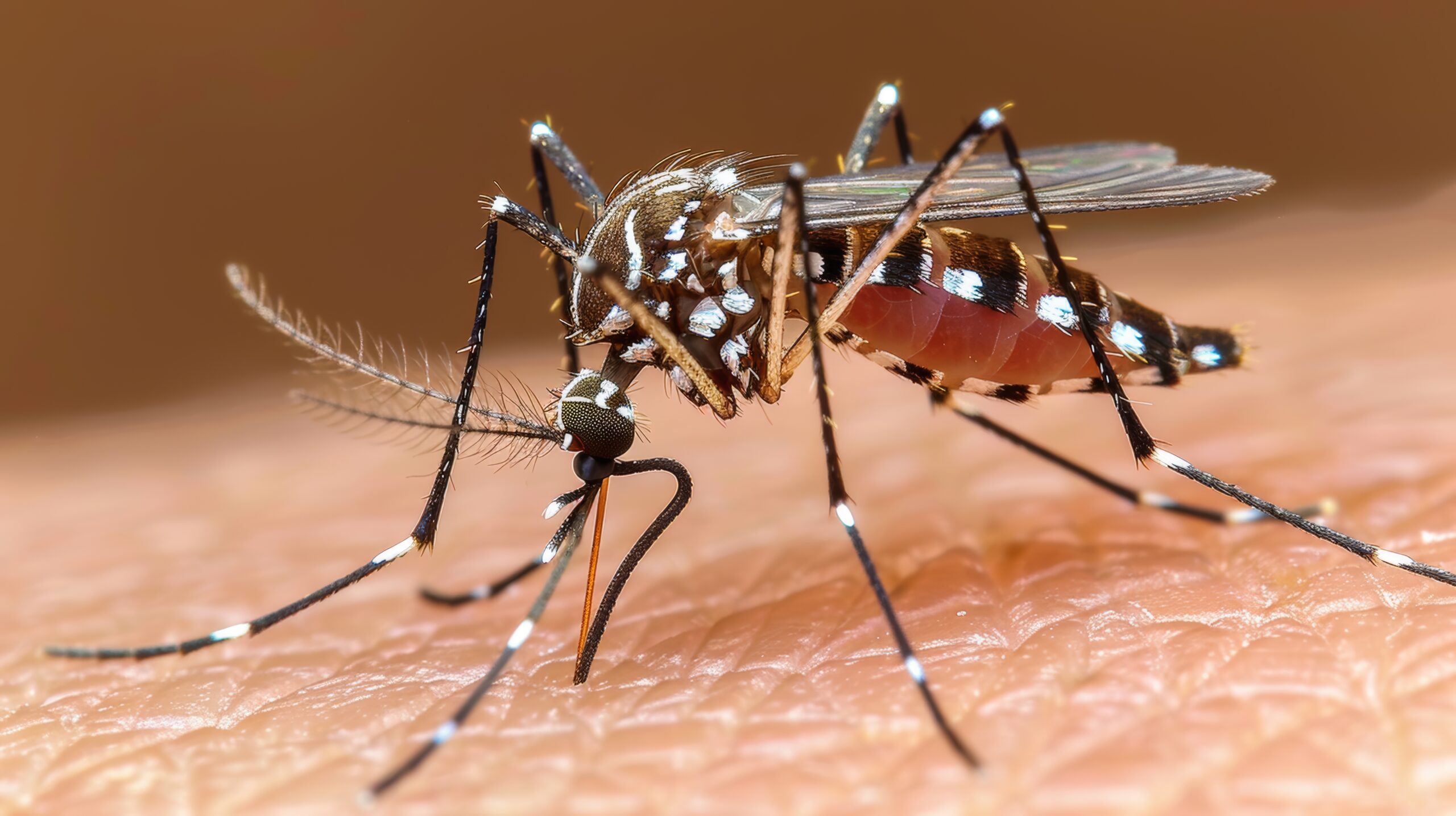
The Zika virus is a vector-borne disease primarily transmitted by tiger mosquitoes (Aedes) in most subtropical and tropical regions. The infection is usually very mild, meaning it sometimes goes unnoticed. However, a Zika virus infection during pregnancy or shortly before conception can lead to significant birth defects, especially of the head and brain (microcephaly). In addition to comprehensive consultation, we offer specialized laboratory diagnostics. This will provide you with greater peace of mind as you pursue your dream of having a child.
Symptoms of Zika virus infection:
- Fever with temperatures up to 39 degrees Celsius
- Typical maculopapular rash that often spreads over the entire body
- Joint pain, especially in the hands and feet
- Redness and swelling of the eyes in the sense of conjunctivitis
- Often headaches
- Fatigue, dizziness, nausea, vomiting, diarrhea
- Microcephaly: Smaller head with brain changes in the newborn.
- Neurological disorders such as a reduced cerebral cortex, retinal changes, joint stiffness and spasticity
Dengue fever is a globally widespread viral infection transmitted from mosquitoes to humans. This disease occurs primarily in tropical and subtropical regions. Due to climate change and globalization, a significant increase in this viral disease is expected.
There is no causal treatment for dengue fever. In the case of infection, only the symptoms can be treated. When traveling to tropical or subtropical areas, it is generally advisable to avoid mosquito bites. Vaccination is available and should be considered on an individual basis, especially in cases of previous infection or for long-term stays.
Symptoms
- High fever up to over 40 degrees Celsius
- Severe headaches, especially behind the eyes
- Muscle, joint and bone pain
- Spotty, pale red rash
- Nausea/vomiting
- In rare cases, bleeding (including internal bleeding), circulatory failure and shock may develop
- Late manifestations with chronic fatigue, exhaustion and hair loss rarely develop
Chikungunya fever occurs 3 to 12 days after a mosquito bite. Symptoms include high fever, severe joint pain, muscle pain, and headache.
Other possible complaints:
- rash
- Redness of the eyes
- Joint swelling
- Nausea, vomiting, loss of appetite, bruising
- Restricted movement, gait of the “hunched man”
- Long-lasting joint pain
Oropouche fever is caused by the Oropouche virus and is transmitted by infected mosquitoes and small flies (Culicoides paraensis). It belongs to the arboviruses.
The disease is named after the Oropouche River in Trinidad, but also occurs in Cuba, Brazil, Bolivia, Colombia and Peru.
The symptoms of oropouche fever are similar to those of dengue fever and include headache, fever, muscle pain, stiff joints, nausea, vomiting, chills, and sensitivity to light. In severe cases, neuroinvasive diseases such as meningitis can occur.
The Pan American Health Organization (PAHO) has issued an epidemic warning for 2024 due to suspected prenatal transmission of the Oropouche virus in Brazil:
Two pregnant women with OROV infection experienced miscarriages in the 8th and 30th weeks of pregnancy. Initial evidence suggests that the virus could cause birth defects similar to those caused by the Zika virus. Therefore, monitoring of pregnant women is being intensified. However, it remains unclear whether the Oropouche virus was actually the cause of the fetal health consequences in these cases.
malaria
What is malaria?
Malaria is caused by single-celled blood parasites and transmitted by mosquitoes. The disease manifests itself with fever and accompanying symptoms such as headaches, body aches, diarrhea, or vomiting.
There are two main forms:
- Malaria tertiana: Usually accompanied by chills.
- Malaria tropica: Causes persistent fever and can be life-threatening if left untreated.
Malaria is usually curable if detected early. If you experience symptoms during or after a tropical stay, always consider the possibility of malaria and seek immediate medical attention.
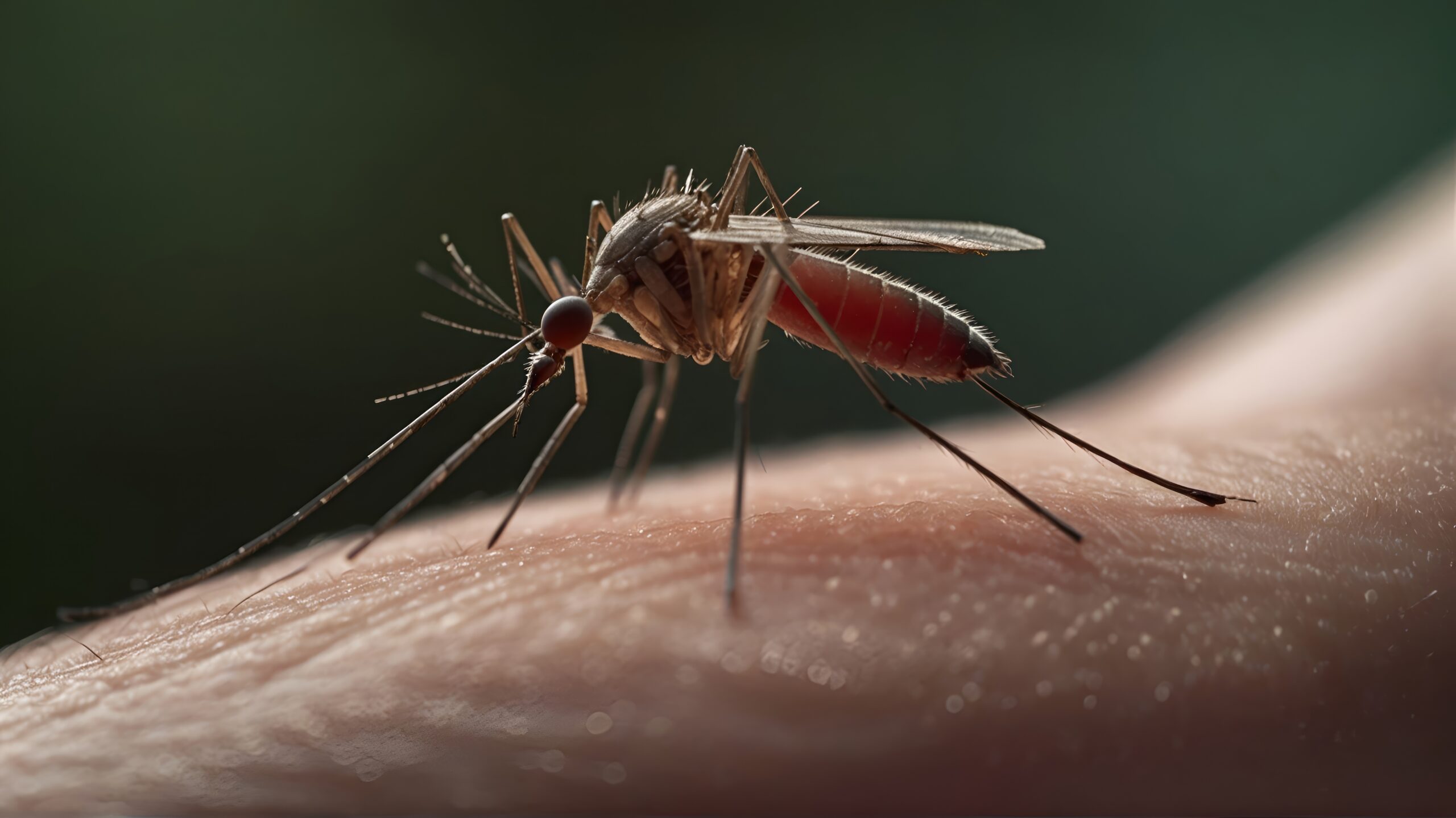

Malaria is one of the world's most significant infectious diseases and occurs primarily in tropical and subtropical regions. Large parts of sub-Saharan Africa are particularly affected, as are regions in South and Southeast Asia, Latin America, and some areas in the Middle East and Oceania. In many of these countries, malaria remains endemic and poses a serious health risk – especially for travelers without natural partial immunity.
Malaria mosquitoes are primarily active in the evening and at night. The following measures can significantly reduce the risk of infection:
- Staying in mosquito-proof rooms during the dark
- Body-covering clothing outdoors after dusk
- Use of insect repellents on uncovered skin
- Keeping bedrooms free of mosquitoes through air conditioning, fly screens, mechanical killing and, if necessary, insecticides (aerosol, vaporizers, candles, incense coils)
- Sleeping under an intact mosquito net
If you develop a fever during or after a stay in a malaria-infested area, you should consult a doctor immediately. The fever can have various causes, but it may be malaria. Fever that occurs during the first week of a stay in a malaria-infested area is generally not malaria, as the malaria parasites do not appear in the blood or cause fever until at least seven days after infection.
If no doctor is available within 24 hours, emergency self-treatment with the prescribed medication should be undertaken if tropical malaria is suspected, according to the instructions in the package insert. A doctor's visit should always be made as soon as possible, even if symptoms improve. This recommendation applies especially to children and pregnant women.
Malaria medications can cause side effects or interactions. If severe side effects occur, you should discontinue the medication (see package insert) and consult a local doctor who can prescribe an alternative or provide advice. Consistent use of chemoprophylaxis is essential, especially in high-risk areas.
Digital support for your malaria prophylaxis
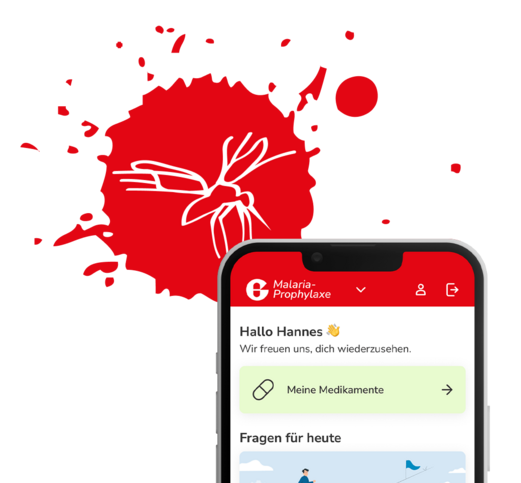
Whether as an app or web-based – use a free digital therapy companion now to support your malaria prophylaxis. It offers you reliable, easy-to-understand information at any time about malaria prevention, possible standby therapies, and the correct use of prescribed medications.
The digital companion helps you to keep track of everything and to implement your preventative care safely and in an informed manner – in addition to medical advice.
Further information (external) can be found here: Digital support for malaria prophylaxis
 German