Ultrasonic
Modern ultrasound devices allow you to examine your internal organs painlessly and in detail.
Typical indications for ultrasound examination
- Breast examination
- Examination of the internal genital organs
- Examination of child development during pregnancy
- Exclusion of childhood malformations
- Examination of the thyroid lobes
- Examination of the abdominal organs such as liver, kidneys
This visual representation allows us to quickly make a diagnosis and, if necessary, initiate treatment. Ultrasound is also used for many general medical issues and for the targeted blocking of specific nerves in pain management.
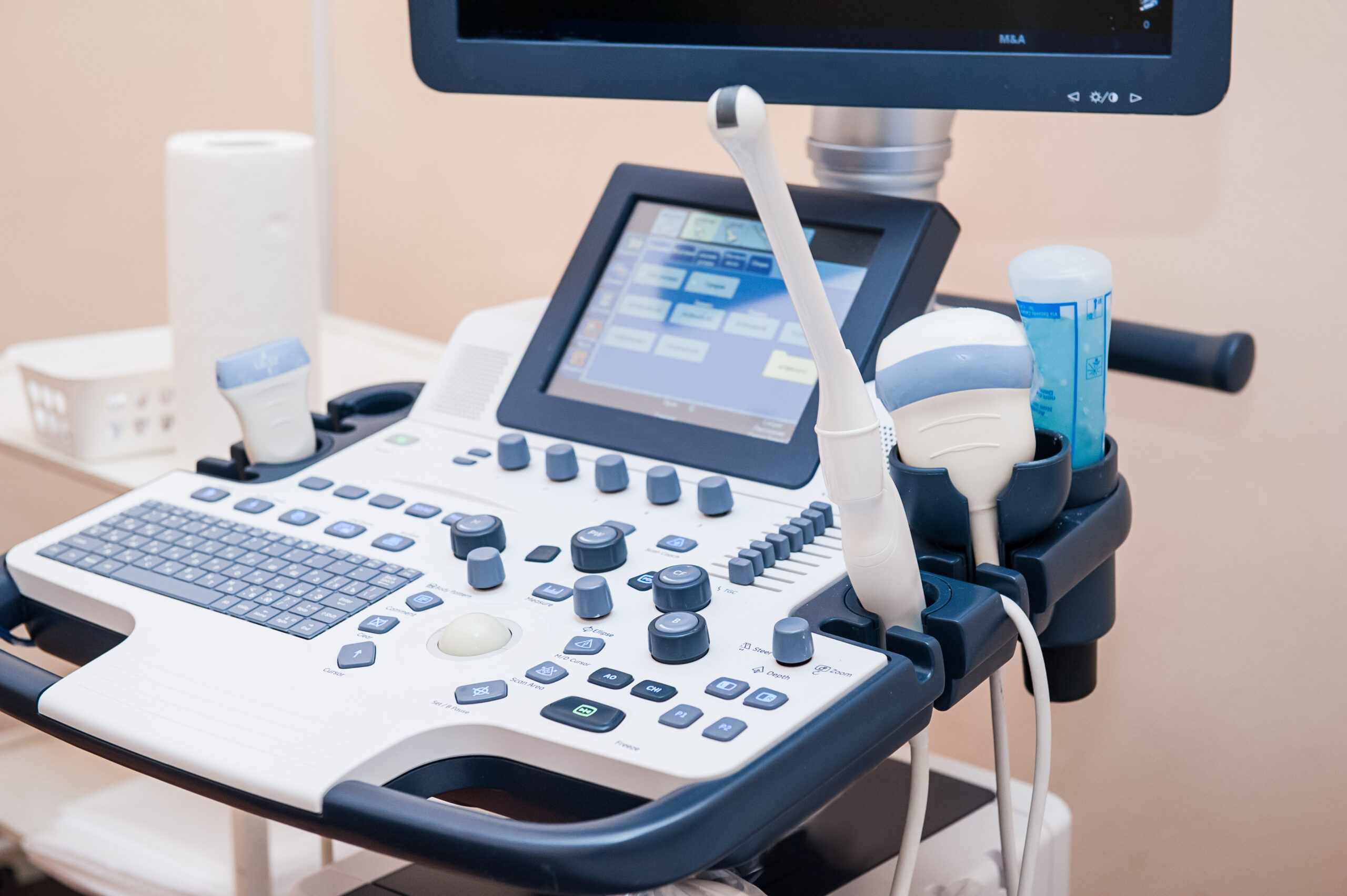


Vaginal sonography is a particularly informative ultrasound examination of the internal female reproductive organs. It allows for a very precise visualization of the uterus, the endometrium, and the ovaries and their structures. Due to the high resolution, even small changes and early abnormalities can be detected that may appear undetected with other examination methods.
This ultrasound method plays an important role in gynecological preventative care and diagnostics. It helps to reliably assess benign changes such as cysts, fibroids, or mucosal alterations, and at the same time to detect malignant diseases of the female reproductive organs as early as possible. Regular examinations help to differentiate diseases in their early stages and to investigate them further in a targeted manner.
Vaginal ultrasound is particularly recommended for women with:
- family history of gynecological cancers
- hormonal problems or menstrual cycle irregularities
- unclear lower abdominal pain
- Desire to have children or as part of fertility diagnostics
- further individual risk factors
In these cases, routine vaginal ultrasound can make an important contribution to improved early detection and provide the basis for timely and effective treatment.
Our experienced practice team will support you with modern diagnostics, professional expertise, and personal attention. Together, we will discuss the examination results and, if necessary, develop an individualized treatment plan that focuses on your personal situation and needs.
Breast cancer remains the most common cancer among women, although men can also be affected – albeit much less frequently. Early detection plays a crucial role in successful treatment and the chances of recovery.
In addition to regular breast self-examination, mammosonography (breast ultrasound) has become increasingly important in breast cancer screening and diagnosis in recent years. It is a gentle, painless, and radiation-free examination method that is particularly informative in women with dense breast tissue.
Breast ultrasound is suitable both for investigating palpable lumps or changes in the breast and as part of routine preventative examinations. It allows for a better differentiation between benign changes such as cysts or fibroadenomas and findings that may require treatment, and enables targeted planning of further diagnostic steps.
Depending on the individual findings, age, and risk profile, it may be advisable to supplement the ultrasound examination with a mammogram. Both procedures complement each other and together contribute to the most reliable and comprehensive assessment of the breast tissue possible.
Mammosonography is therefore an important component of modern breast diagnostics and supports early, reliable and individually tailored preventive care – with the aim of detecting changes in a timely manner and observing or treating them carefully.
Breast elastography is a special ultrasound examination that detects hardened tissue and measures the density of the lesion. It is an optimal and non-invasive complement to the evaluation of initially abnormal findings on palpation. This examination can further support early breast cancer detection.
How does it work?
Pressure from the ultrasound probe deforms the glandular tissue of the breast in different ways. This allows differences in elasticity to be visualized and quantitatively measured.
What is being measured?
The stiffness or elasticity of the tissue may indicate tumors or other pathological changes.
indication
Elastography complements the classic breast ultrasound examination (mammary ultrasound) in cases of unclear findings, e.g. in cases of dense glandular tissue or voluminous breasts.
Why?
The examination makes it possible to obtain further information in practice and without any additional stress, e.g. through X-rays, to distinguish between benign and potentially malignant changes.
Color Doppler sonography is a modern, gentle ultrasound examination that visualizes blood vessels and precisely assesses blood flow. The color-coded representation of blood flow allows for a clear depiction of circulatory conditions and provides important medical information – all without radiation exposure or pain.
During pregnancy, color Doppler ultrasound is used to examine blood flow in the uterus, placenta, and fetal vessels. This allows doctors to assess whether the unborn child is receiving sufficient oxygen and nutrients. Particularly in high-risk pregnancies, this examination enables careful monitoring, for example, in cases of fetal growth abnormalities, maternal hypertension, or other pregnancy complications.
Even outside of pregnancy, color Doppler sonography is a valuable diagnostic procedure in gynecology. Among other things, it helps in clarifying:
- Changes in the ovaries, e.g. cysts or tumors
- Uterine fibroids, especially to assess their blood flow
- unclear lower abdominal pain
- Menstrual irregularities and hormonal issues
- Fertility diagnostics, e.g. to assess the blood flow to the uterus and ovaries
- Suspected cases of inflammatory or vascular changes
The additional information about blood flow often allows for a better assessment of benign and treatable changes, and enables targeted planning of further diagnostic or therapeutic steps.
Color Doppler sonography thus represents a valuable addition to conventional ultrasound examinations and enables precise, individual and safe medical care – both during pregnancy and in gynecological care and diagnostics.


 German