Preventive medical examination
Regular check-ups with a gynecologist are essential for women's health.
In the hustle and bustle of everyday life, we often forget what's most important: ourselves. Yet, regular checkups are the key to staying healthy and carefree in the long run. At our gynecological practice, we offer you a safe and confidential space where your health, your questions, and your individual needs are our top priority. We invite you to view your annual checkup not as a chore, but as a valuable investment in your life.
The so-called Annual Checkup The annual routine visit to the gynecologist is far more than just a check-up. It forms the basis for a trusting doctor-patient relationship. During this visit, we take the time for a detailed discussion about your general well-being, your menstrual cycle, contraception, or menopausal symptoms.
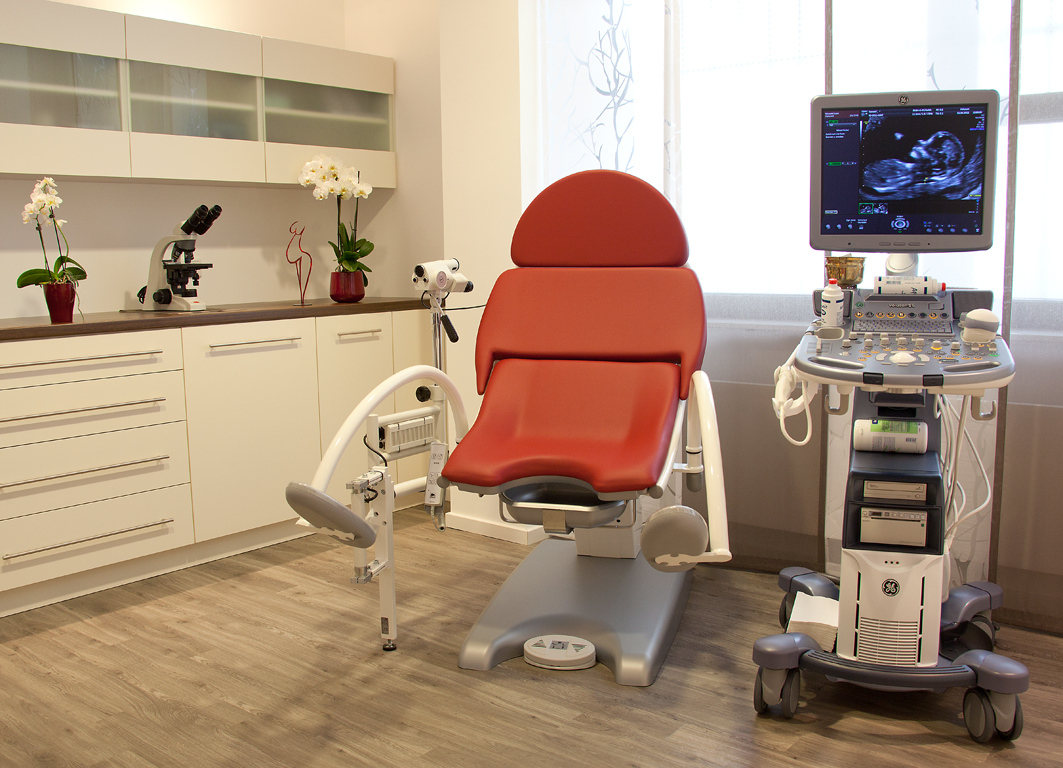




Our goal is to detect changes in the body before they become problems. Each stage of life brings different requirements, and we tailor the examination to your individual age and personal medical history.
A key component of the annual appointments is cancer screening. Thanks to modern diagnostics, cancers or their precursors can now be detected at a stage where they are often very treatable or even curable.
In gynecological checkups, a particular focus is placed on the early detection of cervical cancer. We perform the well-established Pap test (Papanicolaou smear) for this purpose. In this simple and painless procedure, cells are taken from the cervix and examined microscopically in the laboratory. Abnormal results do not necessarily indicate a serious illness, but rather give us the opportunity to monitor more closely and act promptly.
In the context of preventative care, this plays a role. Human papillomavirus, HPV for short, a crucial role. Almost every sexually active person comes into contact with these viruses at some point in their life. While the immune system fights off most infections on its own, certain "high-risk" types can cause cell changes in the cervix if the infection persists.
We integrate HPV testing into your preventative care program according to current guidelines. Should a test result be positive, we will support you with expert knowledge and empathy, explain the next steps, and alleviate your concerns. Knowledge and education are the best ways to combat anxiety.
Prevention and aftercare
The annual check-up serves, among other things, to detect various types of tumors and infections at an early stage. hormonal contraceptives If you are using this method, this preventative examination should be performed every 6 months. In addition to the classic cytological smear, more sensitive methods are available, including testing for HPV (human papillomavirus). We would be happy to advise you on this.
Breast cancer remains the most common cancer among women. Although men are affected significantly less often, breast cancer can occur at any age and in any gender. This makes a conscious and informed approach to one's own breast health all the more important.
In many cases, breast changes are first discovered by the woman or man herself. These include, among other things, palpable lumps or hardening, changes in breast shape or size, dimpling of the skin or nipple, redness, swelling, new pain, or nipple discharge. Not every change is malignant; however, any abnormality should be checked by a doctor promptly.
Regular breast self-examination is therefore an important component of early detection. It helps you develop a good understanding of your own body and to recognize changes early on. We would be happy to show you in our practice how to properly examine your breasts yourself and what you should pay attention to.
In addition to self-examination, physical examination by a doctor and – depending on age, risk profile, and individual circumstances – imaging procedures such as ultrasound or mammography play an important role in breast cancer prevention. We will advise you individually on these matters and follow current medical recommendations.
Diagnosis and treatment of a tumor represent a significant disruption in life. Once the acute phase has been overcome, and in the best case scenario, the tumor can be considered cured, “the story” is still not over.
Regular checkups are indicated after a cancer diagnosis. We offer these individually tailored to your personal situation. Depending on the type of tumor, additional examinations, such as mammography, may be necessary.
If patients complain of persistent fatigue, weakness, or other physical symptoms after surgery or chemotherapy, we will provide them with optimized treatment options in a personalized consultation. We also offer complementary support, such as vitamin infusions and mineral therapies.
Intimate discomfort - itching and burning
The diagnosis of condylomata acuminata (better known as genital warts) often causes initial uncertainty or shame for many sufferers. However, we would like to reassure you: Genital warts are among the most common sexually transmitted infections worldwide. They are caused by certain types of the human papillomavirus (HPV) and are harmless in the vast majority of cases, although often bothersome.
How can you recognize genital warts?
Warts typically appear as small, reddish or greyish-brown nodules in the genital or anal area. They can occur singly or in groups and take on a cauliflower-like structure. Because they are often painless, they are frequently noticed only at a late stage.
Treatment and prevention
In our practice, we offer discreet and effective treatment. Depending on the diagnosis, various therapies are available – from the application of special creams or solutions by you to surgical removal or cryotherapy (freezing) in our practice. It's important to note that the therapy often requires some patience, as the virus can remain in the tissue. We also provide comprehensive advice on vaccination, which offers effective protection against the most common causes, and discuss necessary measures for your partner.
Chronic intimate discomfort, persistent itching, burning, or a feeling of tightness in the genital area are often mistakenly interpreted as a yeast infection. However, these symptoms could be caused by what is medically known as lichen sclerosus – a chronic inflammatory, non-contagious skin disease that primarily affects the genital area.
Because the disease progresses in flare-ups, it often remains undetected for a long time. Without proper treatment, however, it can lead to tissue hardening, scarring, and loss of skin elasticity, often causing pain during intercourse or in everyday life. The exact causes are not yet fully understood, but an autoimmune process is suspected.
Early detection is crucial
In our practice, we place great emphasis on a sensitive and precise diagnosis. Through a targeted physical examination, we can identify typical skin changes (such as porcelain-colored patches). Although lichen sclerosus is currently incurable, it can be very effectively controlled with consistent therapy – usually in the form of highly effective cortisone ointments and special emollients.
Our goal is to maintain your quality of life and prevent further damage. If you suffer from chronic itching or skin changes, please don't hesitate to contact us. We will guide you through the treatment with professional expertise and empathy.
In addition to long-term preventative care, we dedicate equal attention to your acute concerns that may affect your daily well-being. The female intimate area is a sensitive ecosystem that can react to external and internal influences. If the natural balance of lactobacilli is disrupted, this often leads to unpleasant symptoms or a vaginal infection.
In many cases, bacterial vaginosis is the underlying cause. This is not a classic external infection, but rather a temporary imbalance in the natural vaginal flora. Even though symptoms such as altered discharge or itching can be embarrassing for many women, we want to reassure you: such changes are a common occurrence in medicine and are usually very easy to treat.
To help you quickly and effectively, we conduct a microscopic examination on-site. Once the diagnosis is confirmed, we initiate the appropriate therapy – for example, in the form of suppositories or creams. This allows us to restore the natural balance of your flora and provide you with noticeable relief in a timely manner.


 German