Prenatal diagnostics
The time of expectation – security and clarity through prenatal diagnostics
Pregnancy is a very special time in your life – filled with anticipation, but often also with quiet worries and many questions. As your gynecologist, it is my heartfelt desire to provide you and your unborn child with sound medical care and compassionate support during this time.
Modern prenatal diagnostics offer us a wide range of possibilities to assess your baby's development early on and to clarify any potential health risks. This is not just about medical facts, but above all about providing you with peace of mind for your future through transparency and personalized advice.
In the following, I would like to introduce you to two important procedures that can answer different questions: the non-invasive prenatal screening test (NIPT) and amniocentesis.
Amniocentesis
Amniocentesis may be indicated in cases of abnormal first trimester screening to assess the risk of genetic diseases.
Amniocentesis, also known as amniotic fluid testing, is a diagnostic method used in certain cases to detect genetic or chromosomal abnormalities. It can be performed starting from the 15th week of pregnancy and provides valuable information about your baby's health. As part of our care, we place great emphasis on comprehensive counseling and individualized risk assessment to support you in this important decision.
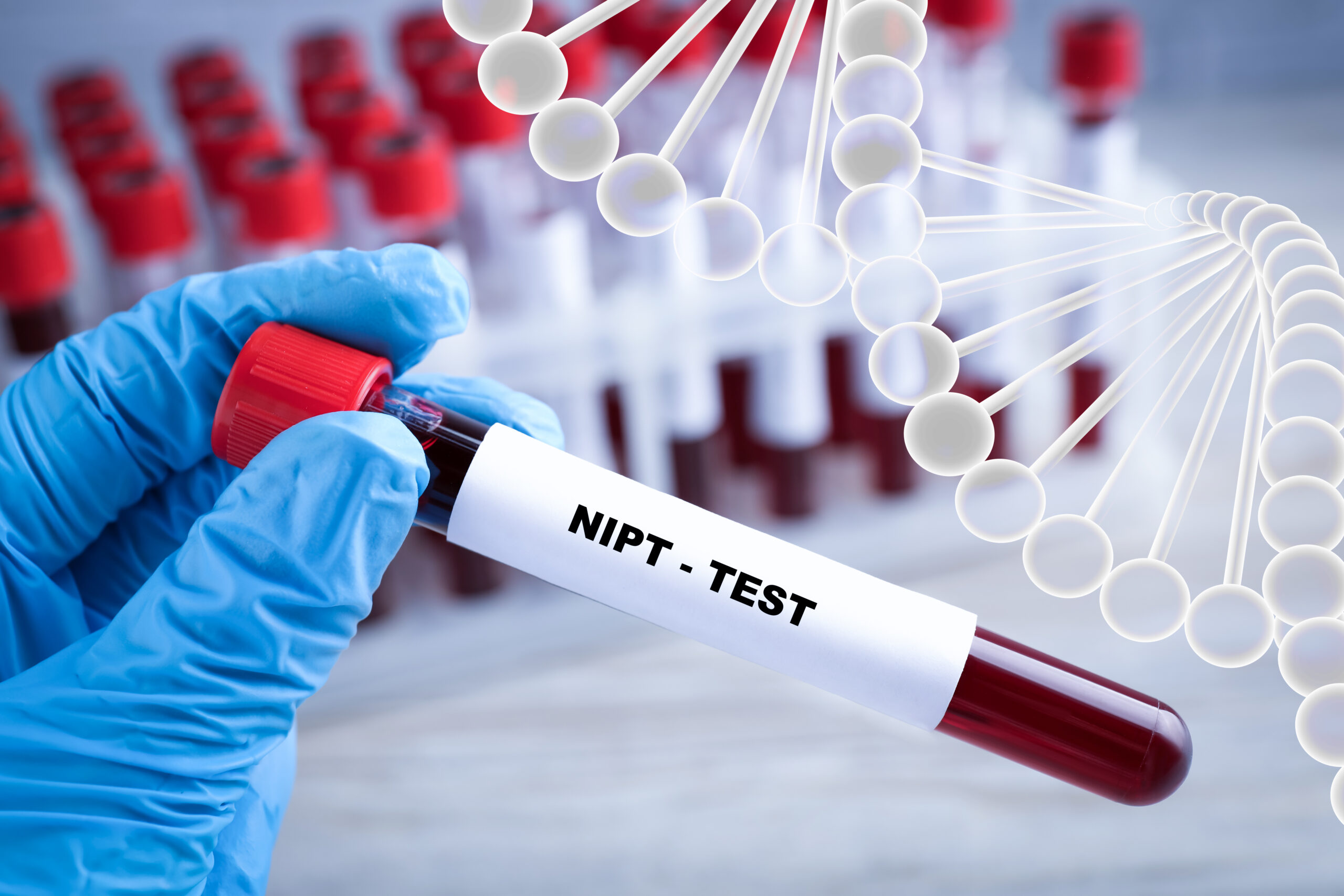
NIPT – non-invasive prenatal test
Safety for mother and child: fetal DNA diagnostics from a maternal blood sample.
Prenatal diagnostics allows us to gain early information about your baby's development and identify potential risks. Using modern techniques such as ultrasound examinations and genetic testing, we can offer you precise and reliable diagnostics. Our goal is to provide you with peace of mind and clarity, allowing us to optimally support you throughout your pregnancy.
Non-invasive prenatal testing (NIPT) uses cell-free fetal DNA from a pregnant woman's blood sample to extract genetic information about the fetus—such as trisomy 13, 18, and 21. These tests carry no risk of miscarriage compared to invasive methods such as amniocentesis or chorionic villus sampling.
 German